Introduction
The source code of the POC can be found in this GitHub repository.
In the dynamic landscape of cloud computing, staying up-to-date with the latest updates and changes to Azure resources is crucial for maintaining efficiency and security. However, managing the lifecycle of Azure resources can be a daunting task, especially for large-scale deployments. Advancements in AI technology are revolutionizing pretty much everything in our industry. I wanted to build a proof-of-concept application that could leverage the Azure Open AI (LLM) to analyze the Azure Updates (typically textual narratives) and make them concrete actionable work items in a backlog.
In this post, just wanted to share the progress I made so far.
Automating Azure Updates with AI
One innovative approach to simplifying Azure resource management involves leveraging Azure Open AI to automate the process of fetching and processing Azure updates. By tapping into published locations for Azure updates, organizations can streamline the identification and dissemination of crucial information regarding updates, enhancements, and changes to Azure services.
The idea I am going with is, periodically fetch the RSS feed of Azure Updates and analyze these feeds with Azure Open AI to generate some insights, such as,
- If the update is actionable.
- If the update requires announcements within the enterprise
- If the update is about a service that is used within the enterprise.
- If the update is about retirement or deprecation of any Azure services then making sure it gets actioned.
The solution design looks following:

The design is quite straightforward indeed.
It is a Daemon/Worker service running as a Container Job that periodically reads the RSS of Azure Updates. Once the updates are read, it will analyze each of the updates through Azure Open AI to generate those actionable insights. Once the insights are generated, it will create a Backlog item into Azure DevOps, so the team can prioritize that in their workflow. These backlog items are intelligently marked or tagged with actionable labels such as “Actionable,” “Retired,” “Deprecated,” or “General Availability.” This tagging system enables teams to quickly prioritize and address the most pressing updates based on their relevance and impact on the organization’s scenarios.
Once the feeds are processed, the Azure Board looks as follows:

It generates the Tags which can be quite handy to navigate to the updates that important:

If we open an Item that looks as below:
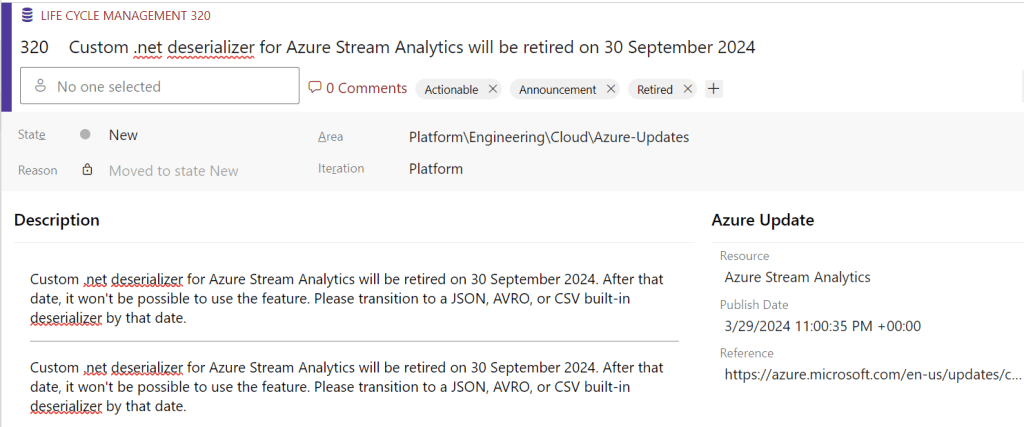
Finally, It uses a Azure Table Storage to keep track of every items that is processed once, to avoid it being processed in the next run.
Monitoring Azure Policy Updates:
Beyond Azure resource updates, the AI application also monitors Azure policy updates published via a this GitHub Repository from Microsoft. By analyzing these updates, the system determines the version upgrades—whether they are major, minor, or patch releases. This proactive approach allows organizations to anticipate and prepare for changes to Azure policies, ensuring compliance and security across their Azure deployments.
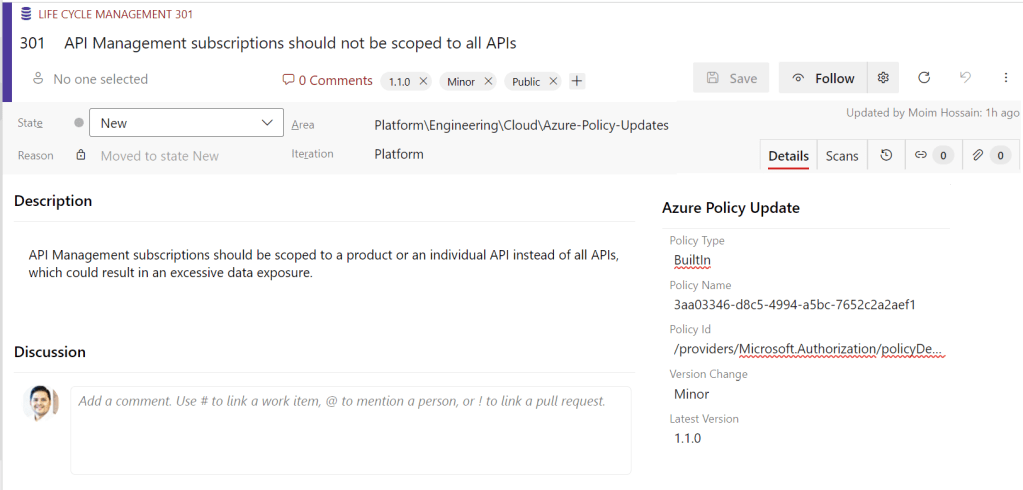
Upon identifying Azure policy updates, the AI system creates detailed Product Backlog Items (PBI) that clearly outline the changes and potential impact on the organization’s Azure environment. These PBIs serve as actionable insights, enabling teams to assess the significance of policy changes and implement necessary adjustments or mitigations as needed.
An example of such Policy Backlog items can be as such:
Visualization
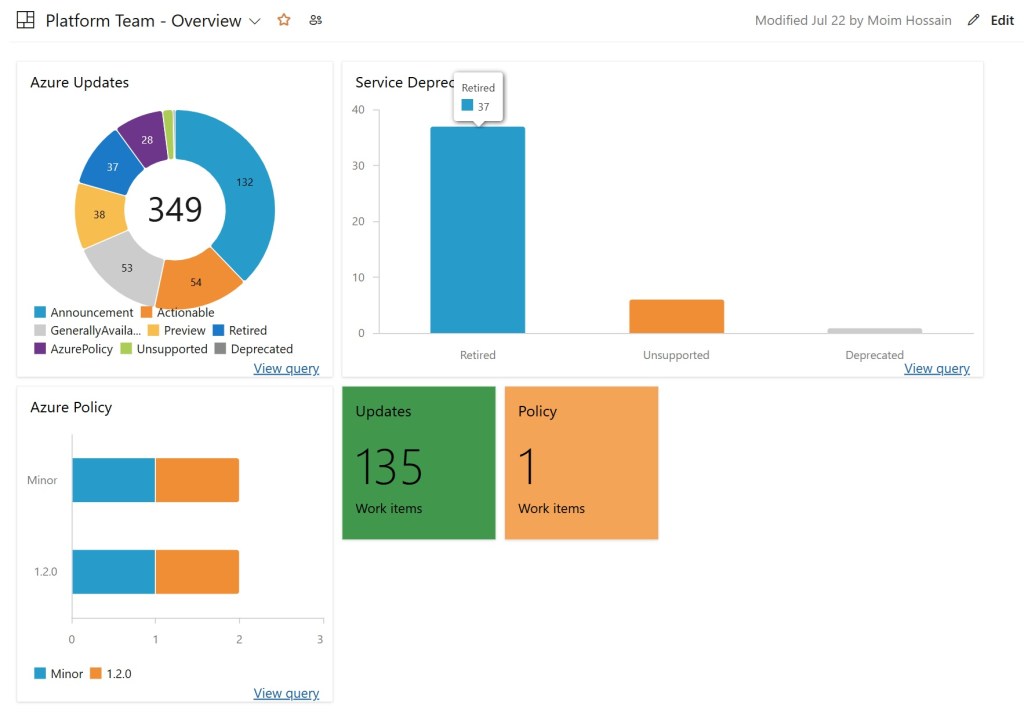
With work items now accessible in Azure DevOps, we can create a unified dashboard to visualize Azure Updates and Policy updates in a single view.
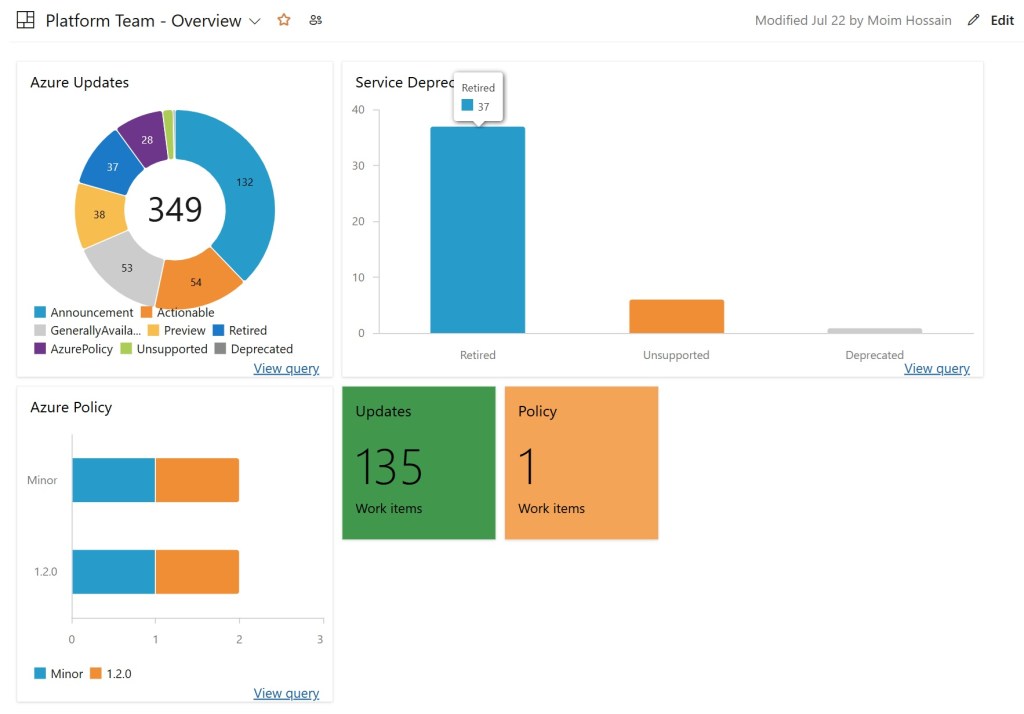
Conclusion
Integrating AI technology into Azure lifecycle management marks a major advancement in simplifying resource management processes. By automating the retrieval, analysis, and prioritization of Azure updates, organizations can proactively maintain secure, compliant, and high-performing Azure environments. With AI-powered tools, teams can effectively navigate the continuously evolving Azure service landscape, fostering innovation and achieving cloud success.

 Reverse Engineering